
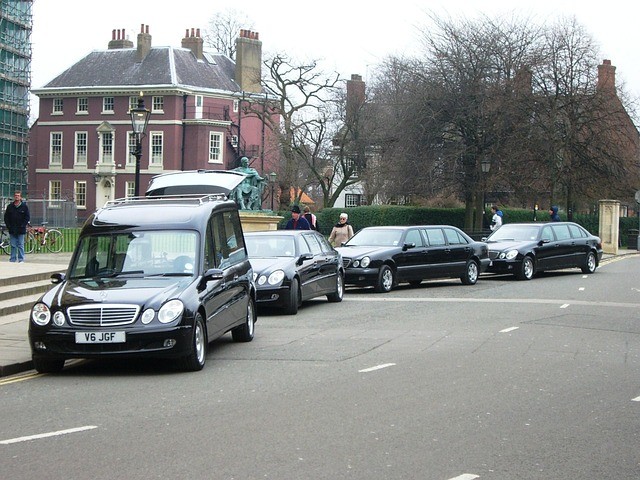
Funeral cortege etiquette is one of those quiet social understandings that many people assume others know and respect, until they find encounter drivers who rush past or emerge into the middle of a funeral procession.
A line of slow-moving cars, headlights on, often led by a hearse, is a powerful and visible expression of grief. It marks a final journey, one that deserves dignity and respect. Yet in recent years, there has been a noticeable shift in how other road users respond. As daily life becomes faster and more pressured, patience on the roads appears to be wearing thin, and some funeral directors are finding that funeral corteges are not always receiving the consideration they once did.
Traditionally, a funeral cortege was treated with a sense of reverence. Drivers would pull over, pause, or at the very least avoid overtaking. Pedestrians might stop and bow their heads. These gestures, though small, reflect a shared cultural understanding: that someone has died, and that those behind the hearse are experiencing one of life’s most significant and emotional moments.
Today, however, that shared understanding can feel less consistent. Many funeral directors report increasing instances of cars cutting into corteges, impatient overtaking, or even drivers sounding their horns in frustration. While this behaviour is rarely malicious, it often stems from a combination of time pressures, distraction, and a lack of awareness about what a cortege represents.
Modern driving environments don’t help. With sat navs dictating routes, tight schedules, and increasing congestion, many drivers are focused on efficiency above all else. A slow-moving cortege can feel like an unexpected obstacle rather than a moment requiring sensitivity. Add to that the fact that not everyone immediately recognises a funeral procession - especially if they’ve never encountered one before - and it becomes easier to see how etiquette can slip.
So, what is the appropriate etiquette when encountering a funeral cortege?
First and foremost, patience is key. If you find yourself behind a cortege, the simplest and most respectful action is to slow down and follow at a safe distance. There is no obligation to stop entirely, but maintaining a calm, unhurried pace shows consideration for those involved.
Overtaking a cortege is generally discouraged unless absolutely necessary. The line of vehicles is intended to stay together, allowing mourners to arrive collectively. Cutting through the procession can be distressing for those inside the cars, particularly close family members who may already be feeling vulnerable.
At junctions, things can become more complicated. Some corteges will proceed through red lights or roundabouts as a continuous group, often with the support of professional funeral staff managing the route. While this can be surprising to other drivers, it is done to keep the procession intact. If you are approaching a junction and notice a cortege passing through, it is courteous to allow them to continue uninterrupted where it is safe to do so.
Pedestrians and bystanders may also wish to show respect, though expectations here are less formal than they once were. A brief pause, removing headphones, bowing your head, or simply standing still as the cortege passes can be a meaningful gesture.
For those arranging funerals, it’s worth recognising that etiquette is evolving. Not everyone will respond in the same way, and that can be difficult to witness during an already emotional day. Funeral directors often plan routes carefully to minimise disruption and reduce the likelihood of stressful interactions with other road users. Some families are choosing alternative approaches altogether, such as smaller corteges, to reflect changing expectations and practical realities.
There is also a growing need for awareness. Younger people may not have attended a funeral or seen a cortege up close. Without that experience, they may simply not realise the significance of what they are encountering. Gentle public education, whether through driving guidance, community conversations, or articles like this, can help rebuild that shared understanding.
Ultimately, funeral cortege etiquette comes down to empathy. Behind every hearse is a person who has died, and behind every car is someone grieving. A few moments of patience on the road is a small but meaningful way to acknowledge that.
As society continues to move at pace, these moments of pause become even more important. They remind us that, despite busy schedules and daily pressures, there are times when slowing down matters. A funeral cortege is one of those times.
For those using The Farewell Guide to plan or navigate a funeral, understanding these small but significant details can make a real difference. Whether you are part of the cortege or simply encounter one along the way, knowing what to expect, and how to respond, helps ensure that this final journey is treated with the dignity it deserves.
In a world that often feels increasingly hurried, funeral corteges offer a quiet invitation to stop, reflect, and show kindness to strangers. And perhaps, in doing so, they remind us of something we risk forgetting: that respect and patience still have a place on our roads and in our communities.
If You Are Part of a Funeral Cortege
- Allow extra time so you don’t feel rushed before setting off
- Follow the lead vehicle or funeral director’s guidance at all times
- Keep a steady, slow pace and maintain a safe distance from the car in front
- Use headlights (if instructed) to help identify the cortege
- Avoid distractions and stay focused on the road
- Do not worry if the cortege becomes split, focus on continuing safely to the destination
- Remain calm if other drivers behave impatiently
- Keep mobile phones on silent and avoid taking calls while driving
- Trust that the route has been planned to minimise stress and delays
- Remember, simply being present is what matters most
If You Encounter a Funeral Cortege
- Slow down and be prepared to adjust your speed
- Keep a respectful distance - do not tailgate
- Avoid overtaking unless absolutely necessary
- Do not cut into the line of vehicles
- Be patient at junctions and allow the cortege to pass where safe
- Refrain from using your horn or showing frustration
- Stay alert, corteges may move through as a continuous group
- If safe, pause briefly as a sign of respect
- Be mindful that mourners may be distressed or distracted
- Remember that a small moment of patience can mean a great deal to grieving families