
A Catholic funeral is a deeply significant religious ceremony that reflects the beliefs of the Catholic faith regarding death, resurrection, and eternal life. For Catholic families in the UK, arranging a funeral that adheres to the traditions of the Church while also meeting the practical and legal requirements of the UK can feel like a considerable undertaking, particularly when carried out during a period of grief.
There are approximately 4.2 million Catholics in England and Wales. Catholic funerals follow a specific Order of Christian Funerals, which guides the rites and prayers that take place between the time of death and the burial or cremation.
This guide explains the key elements of a Catholic funeral, what the Church requires, the practical steps involved, and how to find the right support to help you through the process.
The Catholic Understanding of Death and Funerals
In the Catholic faith, death is understood not as an ending but as a transition. The soul passes from this life into the presence of God, and the funeral rites are intended to commend the deceased to God, offer comfort to the bereaved, and affirm the belief in the resurrection of the body.
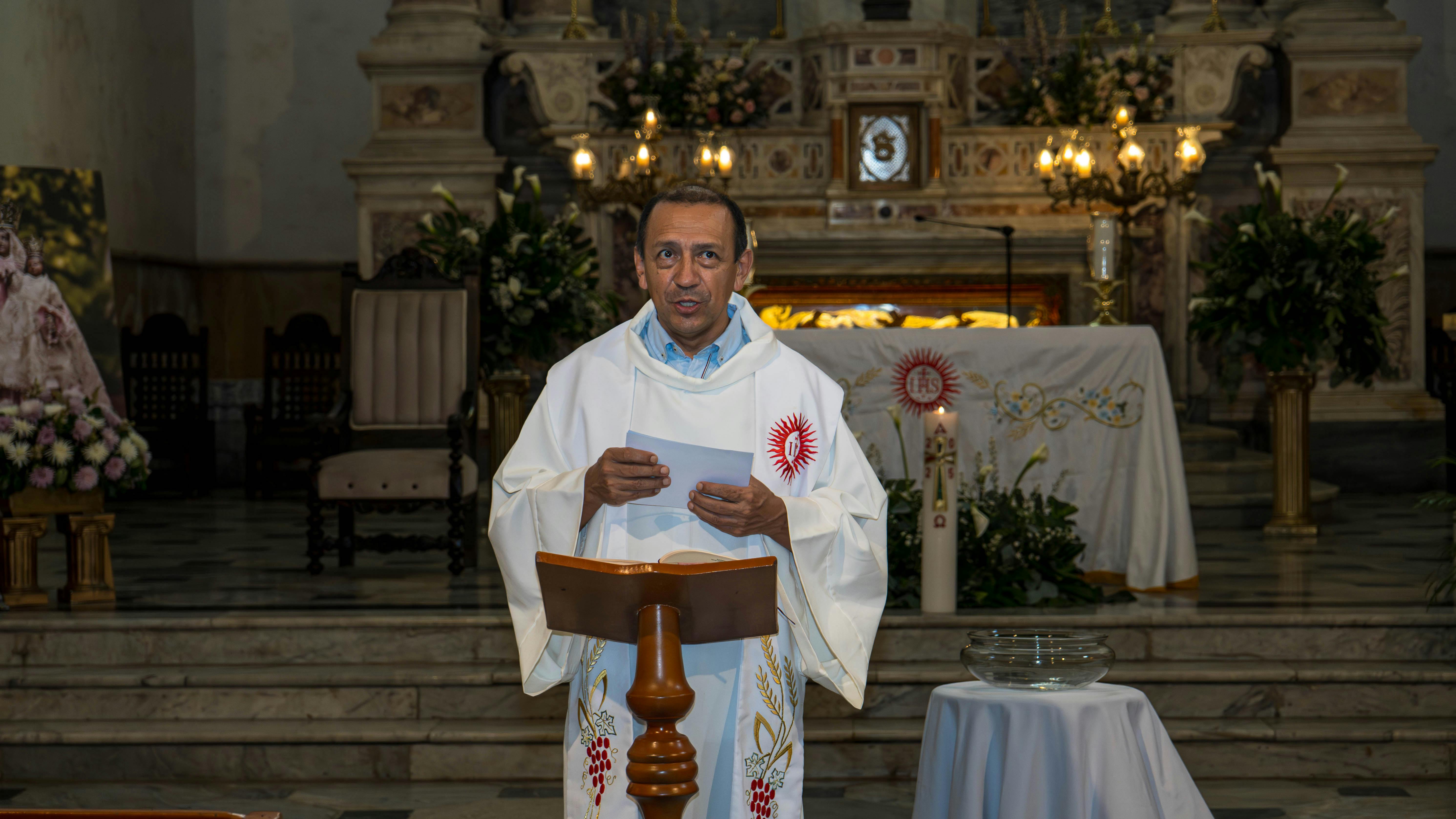
Catholic funeral rites emphasise prayer, the Mass, and community. The Funeral Mass, also known as the Mass of Christian Burial, is the central act of the Catholic funeral and is celebrated by a priest. It is an expression of faith and a communal act of prayer for the soul of the person who has died.
Step 1: Contact the Parish Priest
The first step in arranging a Catholic funeral is to contact the parish priest of the church where the deceased was a parishioner, or the nearest Catholic parish if the deceased was not an active parishioner. The priest will guide the family through the religious requirements and help plan the liturgy.
It is important to make this contact as early as possible, alongside notifying a funeral director. The priest will need to be consulted about the dates available for the Funeral Mass, the readings, and any specific requests the family may have for the service.
Step 2: Appoint a Catholic Friendly Funeral Director
Not all funeral directors have experience with Catholic funerals, and it is worth asking specifically about their familiarity with Catholic rites when making enquiries. A funeral director who understands the requirements of a Catholic service will be able to coordinate effectively with the parish and ensure that all elements of the ceremony are handled appropriately.
The funeral director will manage the practical arrangements including the collection and care of the body, the provision of a coffin, transportation, and coordination with the crematorium or cemetery. They will also assist with the legal requirements, including registering the death and obtaining the necessary certificates for burial or cremation.
Step 3: The Vigil Service
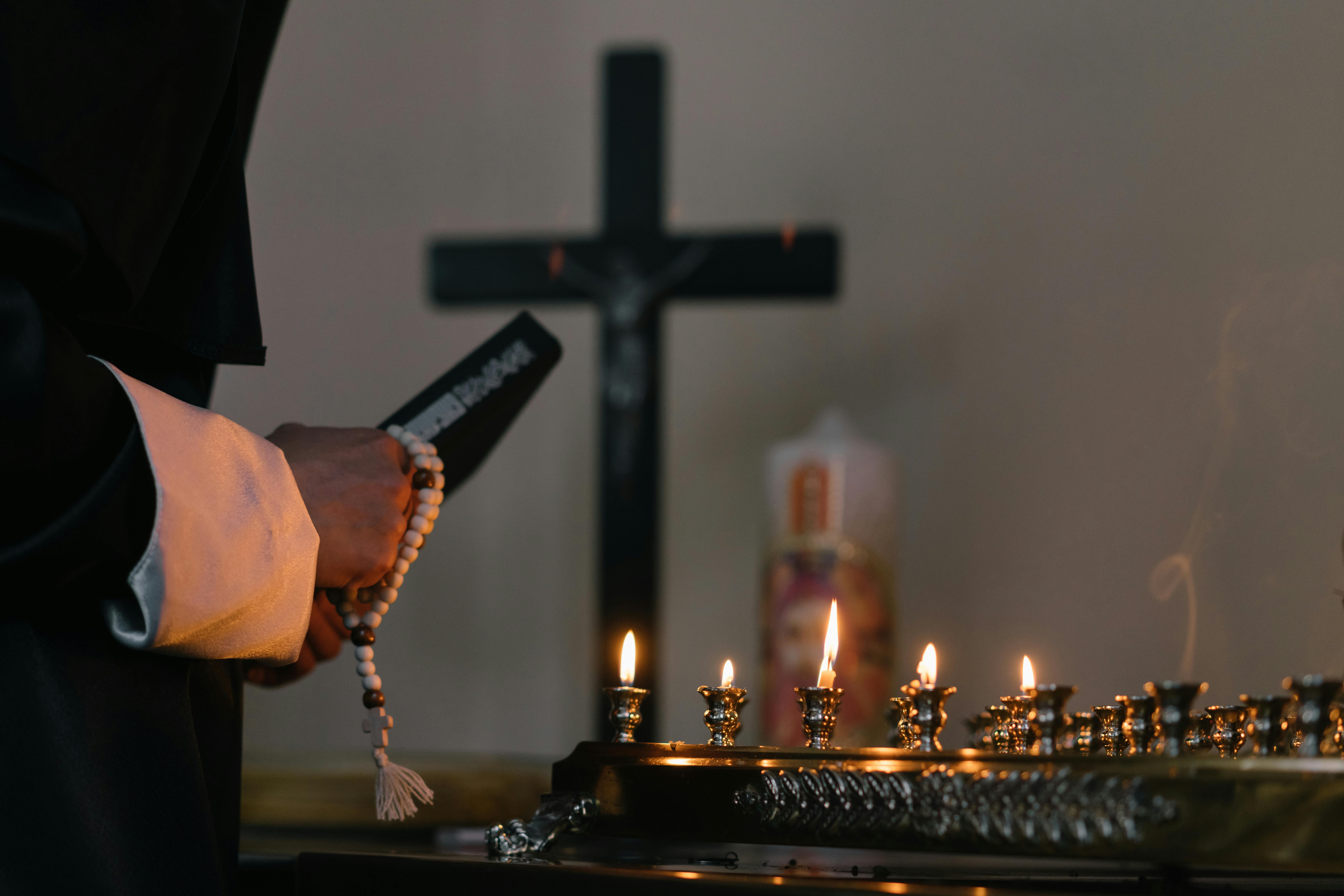
The Catholic Order of Christian Funerals includes a vigil service, sometimes called the reception of the body or the rosary. This typically takes place the evening before the Funeral Mass, either at the church or at the family home, and involves prayers, scripture readings, and often the recitation of the rosary.
The vigil is an important moment of communal prayer that brings family and friends together to support one another and pray for the soul of the deceased. Not all families choose to hold a formal vigil, and the priest can advise on what is most appropriate given the circumstances.
Step 4: The Funeral Mass
The Funeral Mass is the heart of the Catholic funeral rite. It is celebrated by a priest and follows the structure of the Mass, with specific readings, prayers, and rites relating to the funeral. The Mass typically includes:
- An entrance rite, during which the coffin is received at the door of the church and sprinkled with holy water
- The Liturgy of the Word, including Old and New Testament readings and a Gospel reading
- A homily delivered by the priest
- The Liturgy of the Eucharist, including Holy Communion
- The Final Commendation, during which the body is incensed and prayers are offered to commend the soul to God
- The Rite of Committal, which takes place at the graveside or crematorium
Family members or close friends are often invited to read one of the scripture passages during the Mass. Hymns are an important part of the Catholic funeral liturgy, and the parish music director or organist can advise on appropriate choices. Secular music is not generally permitted within the Mass itself, though it may be appropriate at the graveside or at a reception afterwards.
Step 5: Burial or Cremation
Historically, the Catholic Church required burial and did not permit cremation. This position has changed significantly. Since 1963, the Church has permitted cremation, provided it is not chosen for reasons that conflict with the belief in the resurrection of the body.
If cremation is chosen, the Church asks that the cremation take place after the Funeral Mass wherever possible, so that the body is present during the liturgy. The ashes must be kept together and interred in a cemetery, a columbarium, or another sacred place. Scattering ashes is not permitted under Catholic teaching.
If burial is chosen, the Rite of Committal takes place at the graveside, with prayers led by the priest. A Catholic burial plot in a Catholic section of a cemetery is the traditional choice, though burial in any consecrated ground is acceptable.
Readings, Music, and Personal Touches
Catholic funerals follow a liturgical structure, but there is still scope for personalisation within the framework the Church provides. Families may choose from a selection of approved scripture readings, select hymns that hold personal significance, and invite family members or friends to deliver the readings.
A eulogy or tribute may be delivered at the end of the Mass or at the graveside, though it is not formally part of the liturgical rite. The priest can advise on the most appropriate moment for a personal tribute and what length and content would be suitable.
How The Farewell Guide Can Help
At The Farewell Guide, we provide free tools and guidance to help families in the UK navigate every aspect of funeral planning, including Catholic funerals. Our funeral director search tool allows you to find and compare trusted funeral directors in your local area, including those with experience of Catholic services.
Our free funeral planning tool allows you to record your funeral wishes, including your faith and any specific religious requirements, so that your family has clear guidance when the time comes. Visit www.thefarewellguide.co.uk to access our full range of free resources