
There is a widely held assumption about grief: that it arrives at once, that it is at its most intense in the days and weeks following a loss, and that it gradually diminishes over time until life returns to something resembling normal. For many people, this is precisely how bereavement unfolds. But for a significant and often overlooked proportion of those who experience loss, grief does not follow this pattern at all.
For these individuals, the first period following a bereavement passes with a sense of composure that can feel confusing, even alarming. They manage the arrangements, they support others, they return to work, and they carry on. And then, weeks, months, or sometimes years later, grief arrives with an intensity that catches them entirely off guard.
This is delayed bereavement, and it is far more common than most people realize. Understanding why it happens, what triggers it, and how to respond when it surfaces is essential for anyone who has experienced this phenomenon or who is supporting someone who has.
What Is Delayed Bereavement?
Delayed bereavement, also referred to as delayed grief or inhibited grief, is a recognized psychological response to loss in which the full emotional impact of a bereavement does not surface at once but instead appears at a later point, often without any obvious or immediate cause.
It is distinct from the natural ebb and flow of grief, in which a bereaved person may have periods of relative calm followed by waves of sadness. Delayed bereavement refers specifically to situations in which the primary grief response is significantly postponed, sometimes for weeks, months, or even years, and then arrives with considerable force.
It is also important to distinguish delayed grief from the absence of grief. The two can appear similar from the outside, but they are fundamentally different experiences. A person who does not grieve at all following a loss may have had a relationship with the deceased that was complicated, distant, or unresolved. A person experiencing delayed bereavement is grieving, but their grief has been deferred by a combination of psychological, circumstantial, and sometimes physiological factors.
Delayed grief is not a sign of emotional detachment or insufficient love for the person who has died. It is a natural response to loss under specific conditions, and it is more common than most people expect.
Why Does Grief Sometimes Arrive Late?
There are several well-documented reasons why grief may be delayed and understanding them can provide considerable reassurance to those who are experiencing this response.
The most common cause is what psychologists refer to as the buffering effect of practical responsibility. In the immediate aftermath of a death, there is often an enormous amount to organize. The funeral, the administrative tasks, the notification of family and friends, the management of the estate. These responsibilities demand focus and action, and they can create a kind of protective barrier between the bereaved person and the full emotional impact of their loss. While the practical work continues, grief is held at a distance. It is only when the activity ceases and the quiet arrives that it begins to surface.
A second factor is the social expectation of composure. Many people feel, consciously or unconsciously, a responsibility to hold themselves together for the sake of others, particularly in the immediate period following a bereavement. Parents grieve differently in front of their children. Eldest siblings take on an organizing role that leaves little room for personal grief. Partners who have been caregivers for a prolonged period may find that the grief of the loss is temporarily displaced by the relief of the end of suffering. In all these cases, the emotional response is not absent but postponed.
A third cause is the phenomenon of anticipatory grief. Where a person has known for some time that a loss is coming, whether due to a terminal diagnosis or a prolonged decline, they may begin to grieve before the death occurs. This can result in the bereaved person feeling composed in the immediate aftermath, having already processed a massive part of their grief in advance. The delayed response then arrives when something unexpected, a birthday, an anniversary, a piece of music, triggers grief that was not fully resolved.
Finally, there is the role of shock. Even in cases where a death was not entirely unexpected, the actual reality of the loss can be profoundly shocking in a way that temporarily disconnects a person from their emotional response. The mind can only process so much at once, and the protective mechanism of shock can delay the full impact of grief for a considerable period.
Why Delayed Bereavement Is Increasingly Recognized in 2026
There is growing awareness among bereavement professionals, mental health practitioners, and the public that grief is far more varied and unpredictable than traditional models have suggested. The long-held model of grief as a linear progression through defined stages has been revised in recent years, and delayed bereavement is increasingly understood as a legitimate and common variant of the grief experience rather than an anomaly.
Several factors specific to contemporary life have contributed to a rise in delayed bereavement. The pace of modern life leaves little space for grief. Many people return to work within days of a bereavement, driven by financial necessity, professional obligation, or simply the need for the structure and distraction that work provides. This rapid re-immersion in daily life can defer the emotional processing of loss indefinitely.
The pervasive use of social media and digital communication has also changed the way grief is expressed and experienced. There is often an implicit expectation that grief will be performed publicly, and when a bereaved person does not feel moved to post, share, or publicly acknowledge their loss, they can feel both confused by their own response and isolated from the support that more visible grief tends to attract.
The legacy of the COVID-19 pandemic has also left a significant mark on bereavement in the UK. Many people who lost loved ones during the pandemic were unable to be present at the death, were restricted in the funerals they could attend, and were denied the rituals of collective mourning that ordinarily support the process of grief. For many of these individuals, the full weight of those losses is still surfacing years later, as the circumstances that delayed their grief have gradually resolved.
What Does Delayed Grief Feel Like When It Arrives?
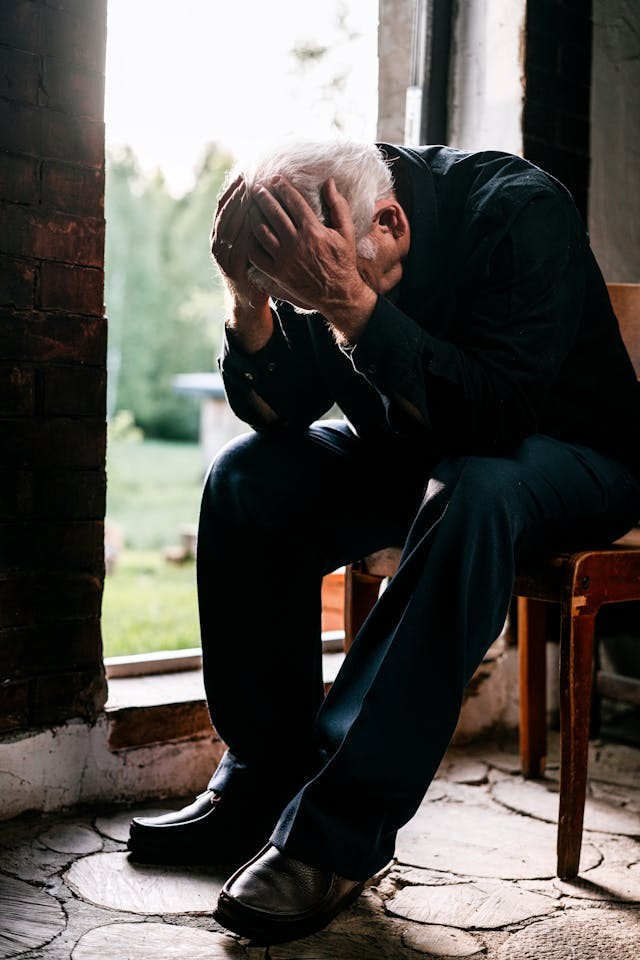
One of the most disorienting aspects of delayed bereavement is that it can feel disproportionate to its immediate trigger. A person may find themselves overwhelmed by grief at a funeral for someone they did not know well, suddenly unable to explain why a particular song has reduced them to tears or unexpectedly devastated by an anniversary or a change of season.
The grief itself is no different in quality from grief that arrives at once. It may involve intense sadness, physical symptoms such as fatigue or loss of appetite, difficulty concentrating, irritability, or a pervasive sense of absence. What is different is the context in which it arrives, which can make it feel confusing, inexplicable, and even shameful to those who do not understand what is happening.
It is also worth noting that delayed grief, when it finally surfaces, can feel more intense than it might have had it arrived at the expected time. The emotional weight of a loss that has been carried without acknowledgement for a prolonged period can build to a point where its eventual release is considerable.
If grief arrives weeks, months, or years after a loss, it does not mean something has gone wrong. It means the mind is finally ready to process what it could not face before.
How to Respond When Delayed Grief Arrives
The most important thing to understand when delayed grief surfaces is that it is a legitimate and valid response to loss, regardless of how much time has passed. There is no statute of limitations on grief, and no period after which it becomes inappropriate to mourn someone who has died.
The first and most helpful response is to allow the grief to be felt rather than suppressed. The instinct to push it back down, to tell oneself that it should be over by now, or to dismiss the feelings as disproportionate is understandable but counterproductive. Grief that is suppressed does not resolve; it simply defers again, often returning with greater force at a later point.
Seeking support is equally important. This may take the form of conversations with trusted friends or family, or it may involve speaking with a bereavement counsellor or therapist who can provide a structured and confidential space in which to process the loss. Many people find that professional support is particularly helpful with delayed grief, precisely because the absence of an obvious recent trigger can make it harder to discuss with those close to them.
It is also worth being gentle with oneself about the practical dimensions of grief. If delayed bereavement is affecting concentration, sleep, appetite, or daily functioning, these are legitimate symptoms that deserve attention and care. Speaking with a GP is a sensible step if grief is significantly disrupting daily life, as there may be medical or therapeutic support available that can help.
Grief, whenever it arrives, is a reminder of the profound significance of the relationships and the lives that shape us. At The Farewell Guide, we understand that bereavement is not a single event but a continuing experience, and we are committed to providing support at every stage of it.
If you are in the process of arranging a funeral, or if you are thinking about planning ahead for the future, our free funeral planning tool is designed to take as much of the practical burden as possible off the shoulders of those who are grieving, so that they have the space and the energy to attend to their own wellbeing.
Our support centre provides free guidance on every aspect of bereavement, from the immediate practical steps following a death to the longer-term experience of grief in all its forms. And our network of trusted funeral directors ensures that when the time comes to arrange a service, you have access to compassionate, professional support at a price that is fair and transparent.
Visit www.thefarewellguide.co.uk to find out more. Whatever stage of grief you are navigating, you do not have to navigate it alone.